
Blog
Cómo lograr que tus estampados duren más de 50 lavados

Tabla de contenido
Si buscas una respuesta breve sobre cómo logramos que los estampados conserven su viveza después de 50 lavados, la clave está en alcanzar una temperatura de curado total de la película de tinta de 160 °C (320 °F). Si lo hacemos correctamente, no solo evitamos que el diseño se agriete, sino que creamos una unión mecánica de calidad profesional entre las fibras y la tinta. Esta unión se mantiene suave y con un aspecto impecable durante años.
Por qué la durabilidad es su mejor herramienta de marketing
Mira, lo he visto mil veces en nuestra fábrica. Un creador pasa horas en un diseño y se descascara en el primer lavado. Eso mata una marca. Cuando usamos un alto rendimiento tinta plastisol No nos limitamos a poner “pintura” en una camiseta. Estamos realizando una fusión química.
Los beneficios reales:
- Fidelización de clientesLa gente conserva las camisas que parecen nuevas, por lo que confían en tu marca.
- No más desperdicioDejarás de perder dinero por devoluciones de clientes o lotes defectuosos.
- Calidad minoristaPuedes cobrar más por las impresiones que realmente duran.
Paso 1: Elegir la tinta adecuada
No todas las tintas son iguales. Si imprimes en una camiseta de algodón estándar, la elección de la tinta para serigrafía al por mayor determinará la durabilidad de tu impresión.
| Tela | La mejor opción de tinta | Por qué funciona |
| Algodón | tinta plastisol estándar para serigrafía | Se adhiere perfectamente a las fibras naturales. |
| Poliéster | Tinta de serigrafía antimigración plastisol | Evita que el color de la camiseta se corra y manche el diseño. |
| Ecológico | Tinta plastisol sin PVC | No es tóxico y se mantiene súper suave. |
Paso 2: La “Regla de Oro” de 160 °C
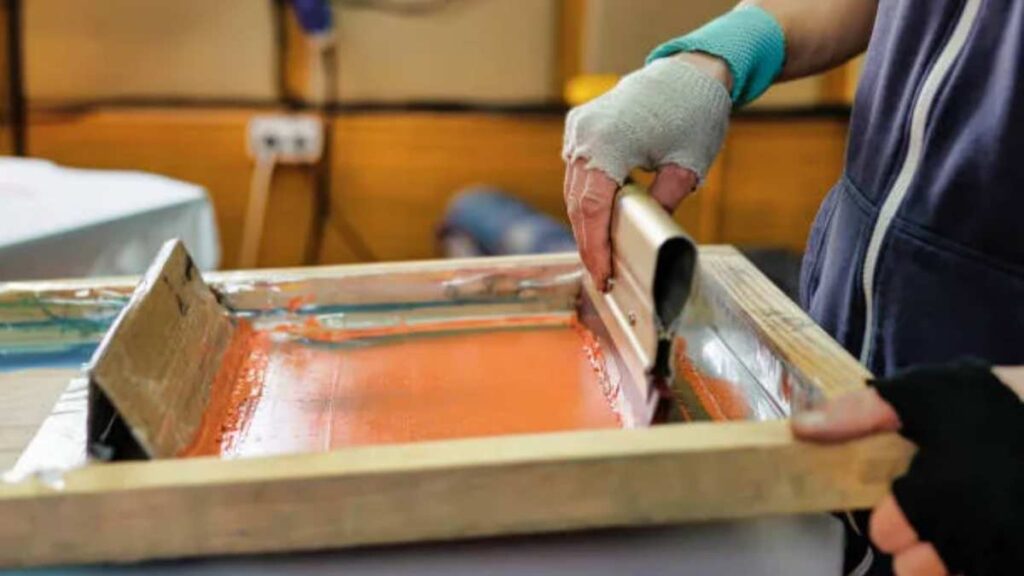
La principal razón por la que fallan las impresiones es el curado insuficiente. Aunque la tinta parezca seca, es posible que no se haya fusionado correctamente. Si la parte central de la capa de tinta no alcanza los 160 °C (320 °F), básicamente se trata de barro seco.
Buenas prácticas: La prueba de estiramiento
Siempre les decimos a nuestros socios que esperen a que la impresión se enfríe y luego la estiren con firmeza. Si la tinta se agrieta y no recupera su forma original, aún no está seca. Deben aumentar la temperatura o reducir la velocidad de la cinta transportadora.
Paso 3: Gestión del depósito de tinta
Si la tinta es demasiado líquida, no tendrá la consistencia suficiente para adherirse a las fibras. Pero si es demasiado espesa, podría agrietarse como el plástico viejo. Recomendamos un número de malla entre 110 y 156 para la mayoría de los trabajos. Esto garantiza que la tinta plastisol se adhiera a la prenda lo suficiente como para resistir el lavado a máquina.
Para camisetas oscuras, es necesario utilizar una base de tinta plastisol blanca para serigrafía. Esta actúa como base, pero requiere más calor para secarse, ya que la capa es más gruesa.
Solución de problemas: ¿Por qué se está atenuando?
- Descamación: Esto casi siempre implica un curado insuficiente.
- Colores apagadosEs posible que estés utilizando una tinta con poca pigmentación, por lo que deberías cambiar a un profesional. tienda de tintas para serigrafía.
- PeladuraEsto ocurre en los tejidos sintéticos cuando no se utiliza el aditivo o la base adecuados.
Preguntas frecuentes: Lo que realmente quieres saber
Q1. ¿Puedo usar una pistola de calor?
Se puede, pero es arriesgado para una durabilidad de más de 50 lavados. Las pistolas de calor no son consistentes, pero un secador instantáneo garantiza que la tinta plastisol se cure de manera uniforme.
Q2. ¿Importa la temperatura de lavado?
Sí. El agua fría es mejor para la impresión, pero una impresión con tinta Shaliteink curada correctamente también resiste ciclos de calor.
Q3. ¿Por qué la tinta blanca se descascara más rápido?
Es más espesa. El calor tarda más en penetrar la tinta plastisol blanca para serigrafía que la tinta negra.
Q4. ¿Debo usar suavizante de telas?
No lo recomendamos. Puede romper la unión entre la tinta y la fibra.
Q5. ¿Cómo sé que está curado sin lavarlo?
Utilice la prueba de estiramiento mencionada anteriormente o utilice etiquetas térmicas para comprobar la temperatura.
 EN
EN  DE
DE  ES
ES  PT
PT  JA
JA